Friday, May 1, 2020

PUBG MOBILE LITE 0.12.0 APK+OBB

PUBG MOBILE LITE 0.12.0 APK+OBB


===============================================


PUBG MOBILE LITE 0.12.0 APK+OBB :- 


(460MB ONLY)

=======================================

Please Install "7-zip and WINRAR" to extract the files.

💘 Download Winrar :-
🌹  (32bit PC)
🌹  (64bit PC)

💘 Visual C++ Redistributable 2012 :-
🌹 Download

If your PC has no net framework then, you can
download net framework from here :-

💘 net framework 4.6
🌹 Download

💘 IMPORTANT 💘:-
🌹 ALWAYS DISABLE YOUR ANTIVIRUS BEFORE EXTRACTING THE FILES.
----------------------------------------------

Thank You For Watching My Video.....

We Are Thank Full To You...

And Don't Forget To Subscribe To My Channel...

And Keep Visiting Our Channel, Keep Supporting Our Channel, And Keep Loving Our Channel ...

Thank You So Much................
----------------------------------------------------------------------

THANK YOU SOO MUCH FOR VISITING OUR SITE.

The Final Form Of My Home Made Magnetic Army Transport

I wanted to put out an update to my last post on building a magnetic model transport system for my Convergence.

Just before Captain Con my wife was kind enough to finish making the bag to carry all of the magnetic bins I built. It's frankly huge, but it carries absolutely everything without any issue.


It's huge! Total size is 16" deep, 24" wide, and about 15" tall. In the above picture it's carrying my dice tray, dice, all of my Convergence and a Blacksmiths Guild Ball team, and my sheet pan/tournament tray (sprayed silver).

The bag is semi-rigid, using some foam internally between the fabric to give some stability and padding. My wife did an outstanding job on it.

I got some flak from my Guild Ball friends for how much room I was taking up in the trunk on the drive up, but its awesome.  It fits neatly in my own car's trunk and will be used for all my local travel from now on. This is significantly easier than when I had to use an old PC carrying strap to bind all my cases together to carry the CoC around locally.

In case you didn't see the last post, here are what the cases look like populated with my stuff:


Conclusions

If you compare this to an actual product of equivalent size, it's about what you'd get in a Magna Rack 1520 from Battle Foam.  The racks plus bag for that is $365 plus shipping.  If you add up total materials for my system, I'm likely looking at about $100 max. Of course, I didn't have to pay for any labor in this creation.

On the flip side, I mentioned to my wife that she could probably pull $100 to $150 for a bag like that for other gamers if she tried to make one and she said in no uncertain terms that it flat out isn't worth it for her labor to charge that little.  Apparently the bag was a bit of a pain in the ass for her to make. She was happy to make it for me, but no one else has my charm to convince her it's worth making another.

If I wasn't married to an extremely talented quilter (and all around amazing woman) I'd probably would have to had been more careful when picking out my bins to make sure I could arrange them to fit in a piece of luggage I could buy rather than having the bag being fabricated to meet the specs of what bins I purchased.

I'm very happy to have done this, and I intend on magnetizing my other armies to use this system going forward, though I already have a bunch of foam so I'm not as motivated to go ahead with that. Plus I plan on just using Convergence for a while anyway.

Sunday, April 26, 2020

What Is Keylogger? Uses Of Keylogger In Hacking ?


What is keylogger? 

How does hacker use keylogger to hack social media account and steal important data for money extortion and many uses of keylogger ?

Types of keylogger? 

===================

Keylogger is a tool that hacker use to monitor and record the keystroke you made on your keyboard. Keylogger is the action of recording the keys struck on a keyboard and it has capability to record every keystroke made on that system as well as monitor screen recording also. This is the oldest forms of malware.


Sometimes it is called a keystroke logger or system monitor is a type of surveillance technology used to monitor and record each keystroke type a specific computer's keyboard. It is also available for use on smartphones such as Apple,I-phone and Android devices.


A keylogger can record instant messages,email and capture any information you type at any time using your keyboard,including usernames password of your social media ac and personal identifying pin etc thats the reason some hacker use it to hack social media account for money extortion.

======================

Use of keylogger are as follows- 

1-Employers to observe employee's computer activity. 

2-Attacker / Hacker used for hacking some crucial data of any organisation for money extortion.

3-Parental Control is use to supervise their children's internet usage and check to control the browsing history of their child.

4-Criminals use keylogger to steal personal or financial information such as banking details credit card details etc and then which they will sell and earn a good profit. 

5-Spouse/Gf tracking-if you are facing this issue that your Spouse or Gf is cheating on you then you can install a keylogger on her cell phone to monitor her activities over the internet whatever you want such as check Whats app, facebook and cell phone texts messages etc . 

=====================

Basically there are two types of keylogger either the software or hardware but the most common types of keylogger across both these are as follows-

API based keylogger 

Form Grabbing Based Keylogger 

Kernal Based Keylogger 

Acoustic Keylogger ETC . 

====================

How to detect keylogger on a system?

An antikeylogger is a piece of software specially designed to detect it on a computer. 

Sometype of keylogger are easily detected and removed by the best antivirus software. 

You can view  the task manager(list of current programs) on a windows PC by Ctrl+Alt+Del to detect it.

Use of any software to perform any illegal activity is a crime, Do at your own risk.


More info
  1. Growth Hacking Courses
  2. Paginas De Hackers
  3. Como Convertirse En Hacker
  4. Como Hacer Hacker

PKCE: What Can(Not) Be Protected


This post is about PKCE [RFC7636], a protection mechanism for OAuth and OpenIDConnect designed for public clients to detect the authorization code interception attack.
At the beginning of our research, we wrongly believed that PKCE protects mobile and native apps from the so called „App Impersonation" attacks. Considering our ideas and after a short discussion with the authors of the PKCE specification, we found out that PKCE does not address this issue.
In other words, the protection of PKCE can be bypassed on public clients (mobile and native apps) by using a maliciously acting app.

OAuth Code Flow


In Figure 1, we briefly introduce how the OAuth flow works on mobile apps and show show the reason why we do need PKCE.
In our example the user has two apps installed on the mobile phone: an Honest App and an Evil App. We assume that the Evil App is able to register the same handler as the Honest App and thus intercept messages sent to the Honest App. If you are more interested in this issue, you can find more information here [1].

Figure 1: An example of the "authorization code interception" attack on mobile devices. 

Step 1: A user starts the Honest App and initiates the authentication via OpenID Connect or the authorization via OAuth. Consequentially, the Honest App generates an Auth Request containing the OpenID Connect/OAuth parameters: client_id, state, redirect_uri, scope, authorization_grant, nonce, …. 
Step 2: The Browser is called and the Auth Request is sent to the Authorization Server (usually Facebook, Google, …).
  • The Honest App could use a Web View browser. However, the current specification clearly advice to use the operating system's default browser and avoid the usage of Web Views [2]. In addition, Google does not allow the usage of Web View browser since August 2016 [3].
Step 3: We asume that the user is authenticated and he authorizes the access to the requested resources. As a result, the Auth Response containing the code is sent back to the browser.

Step 4: Now, the browser calls the Honest App registered handler. However, the Evil App is registered on this handler too and receives the code.

Step 5: The Evil App sends the stolen code to the Authorization Server and receives the corresponding access_token in step 6. Now, the Evil App can access the authorized ressources.
  • Optionally, in step 5 the App can authenticate on the Authorization Server via client_id, client_secret. Since, Apps are public clients they do not have any protection mechanisms regarding the storage of this information. Thus, an attacker can easy get this information and add it to the Evil App.

    Proof Key for Code Exchange - PKCE (RFC 7636)

    Now, let's see how PKCE does prevent the attack. The basic idea of PKCE is to bind the Auth Request in Step 1 to the code redemption in Step 5. In other words, only the app generated the Auth Request is able to redeem the generated code.


    Figure 2: PKCE - RFC 7636 

    Step 1: The Auth Request is generated as previosly described. Additionally, two parameters are added:
    • The Honest App generates a random string called code_verifier
    • The Honest App computes the code_challenge=SHA-256(code_verifier)
    • The Honest App specifies the challenge_method=SHA256

    Step 2: The Authorization Server receives the Auth Request and binds the code to the received code_challenge and challenge_method.
    • Later in Step 5, the Authorzation Server expects to receive the code_verifier. By comparing the SHA-256(code_verifier) value with the recieved code_challenge, the Authorization Server verifies that the sender of the Auth Request ist the same as the sender of the code.
    Step 3-4: The code leaks again to the Evil App.

    Step 5: Now, Evil App must send the code_verifier together with the code. Unfortunatelly, the App does not have it and is not able to compute it. Thus, it cannot redeem the code.

     PKCE Bypass via App Impersonation

    Again, PKCE binds the Auth Request to the coderedemption.
    The question rises, if an Evil App can build its own Auth Request with its own code_verifier, code_challenge and challenge_method.The short answer is – yes, it can.

    Figure 3: Bypassing PKCE via the App Impersonation attack
    Step 1: The Evil App generates an Auth Request. The Auth Request contains the client_id and redirect_uri of the Honest App. Thus, the User and the Authorization Server cannot recognize that the Evil App initiates this request. 

    Step 2-4: These steps do not deviate from the previous description in Figure 2.

    Step 5: In Step 5 the Evil App sends the code_verifier used for the computation of the code_challenge. Thus, the stolen code can be successfully redeemed and the Evil App receives the access_token and id_token.

    OAuth 2.0 for Native Apps

    The attack cannot be prevented by PKCE. However, the IETF working group is currently working on a Draft describing recommendations for using OAuth 2.0 for native apps.

    References

    Vladislav Mladenov
    Christian Mainka (@CheariX)

    Related posts


    Saturday, April 25, 2020

    Zero-Day Warning: It's Possible To Hack iPhones Just By Sending Emails

    Watch out Apple users! The default mail app pre-installed on millions of iPhone and iPad has been found vulnerable to two critical flaws that could let remote hackers secretly take complete control over Apple devices just by sending an email to targeted individuals. According to cybersecurity researchers at ZecOps, the vulnerabilities in question are out-of-bounds write and remote heap

    via The Hacker News
    More information

    1. Que Es El Hacking Etico
    2. Fake Hacking
    3. Como Aprender A Hackear
    4. Curso Hacking Gratis

    Wafw00F: The Web Application Firewall Fingerprinting Tool

    How does wafw00f work?
       To do its magic, WAFW00F does the following steps:
    • Sends a normal HTTP request and analyses the response; this identifies a number of WAF solutions.
    • If that is not successful, wafw00f sends a number of (potentially malicious) HTTP requests and uses simple logic to deduce which WAF it is.
    • If that is also not successful, wafw00f analyses the responses previously returned and uses another simple algorithm to guess if a WAF or security solution is actively responding to wafw00f's attacks.

       For further details, check out the source code on EnableSecurity's main repository.

    What does it detect? WAFW00F can detect a number of firewalls, a list of which is as below:

    wafw00f's installation
       If you're using Debian-based distro, enter this commands to install wafw00f: sudo apt update && sudo apt install wafw00f

       But if you're using another Linux distro, enter these commands to install wafw00f:

    How to use wafw00f?
       The basic usage is to pass an URL as an argument. Example:

    Final Words to you
       Questions? Pull up an issue on GitHub Issue Tracker or contact to EnableSecurity.
       Pull requests, ideas and issues are highly welcome. If you wish to see how WAFW00F is being developed, check out the development board.

       Some useful links:

       Presently being developed and maintained by:

    Related links

    Wednesday, April 22, 2020

    15 Hidden Android Features You Should Know

    While Android has matured by leaps and bounds, it's still going through the refinement phase. Over time, Google has both added and removed many popular features in Android. Sometimes the features are completely removed. However, in many cases, they make it to the Settings page or they are buried under different hidden places inside Android. That's why we have come up with this article where we unearth 15 hidden Android features that are quite interesting and helpful. So, let's go ahead and explore some unique Android features which are available on our Android devices.


    Hidden Android Features

    Here, we have mentioned several hidden Android features ranging from privacy, security, ease of use and more. Further, we have also added some obscure Android features which were released recently but might have gone under the radar. Now with that said, here are the hidden Android features that you should know and use often.

    1. Block Spam Calls

    The one feature that I turn on whenever I set up a new Android device is: filter spam calls. It saves me from unwanted calls by telemarketers, fraudsters and spammers. If you use a stock Android device, you must have the Phone app by Google installed as your default dialer. To enable spam call blocking, open the Phone app and tap on the three-dot menu on the top-right corner and open Settings. After that, open "Caller ID and spam" and enable both the toggles. Now, whenever you will receive a call by spammers, the screen won't light up or make any sound. It's almost like DND with Total Silence turned on.
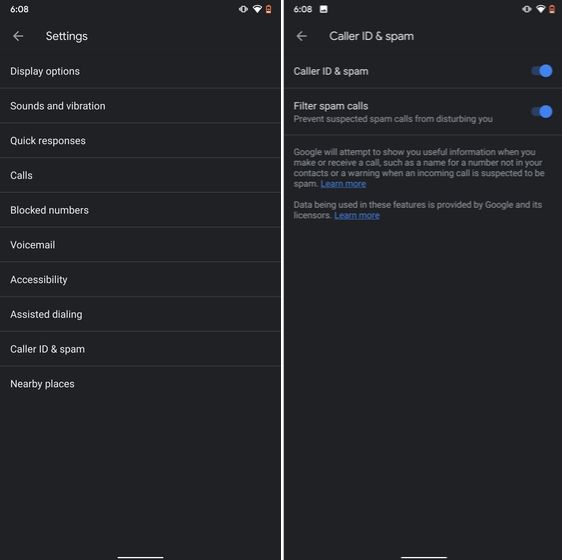
    1. Block Spam Calls hidden android features

    If you are worried that you will miss important calls then fret not. I have been using this feature for a long time and I can vouch that it works flawlessly. While there are other apps like Truecaller with similar features, you should be wary against handing your data to third-party apps, especially given its shady past record.

    2. Verification Code Autofill

    Many of us have allowed SMS permission to multiple apps for seamless OTP verification. However, this can lead to serious breach as apps can read all your text messages and also build credit profile without your consent. To crack down on this behavior, Google has brought a new API called the SMS Retriever. It allows apps to capture a one-time code without asking for SMS permission. In case, the app developer has not implemented this API, Google will act as a bridge and provide the verification code. That is awesome, right? So to enable this feature, navigate to Settings -> Google -> Verification Code Autofill and enable the toggle. Make sure you have also enabled the Autofill service by Google.
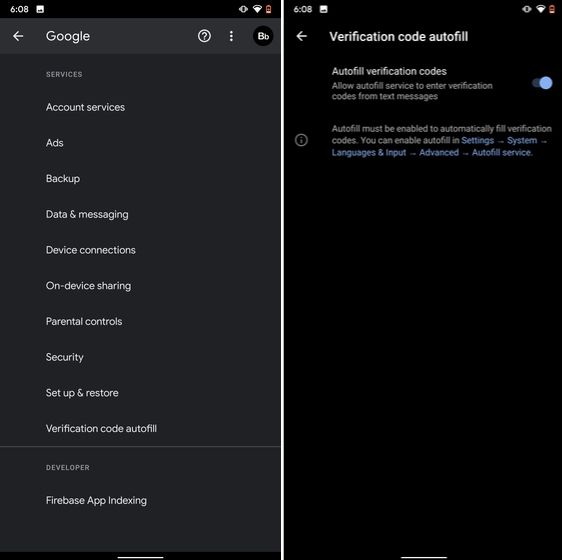
    2. Verification Code Autofill

    3. Force Dark Mode on all Apps

    While the dark mode is slowly becoming the norm, there are still apps like Facebook and WhatsApp which are yet to embrace the dark side. If you want to force dark mode on a range of apps then there is a hidden Android setting that lets you do it. However, you must be on the latest Android 10 build. To enable dark mode for all the apps, navigate to Settings -> About Phone and tap on the Build Number for seven times continuously. A toast notification will show up prompting "Developer Options have been enabled". Now go back, and search for "Override force-dark" in the Settings page. Tap on the first result and then enable the toggle. Just to be sure, restart your device and check if dark mode is working on all apps.
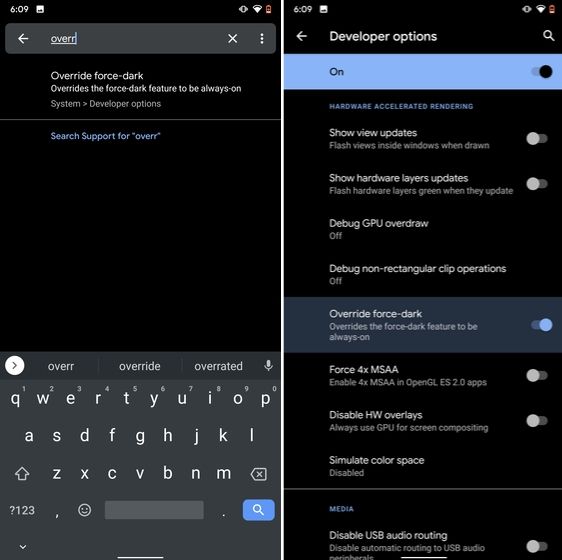
    3. Force Dark Mode on all Apps

    4. Focus Mode

    Google has brought a new feature called Focus Mode to Digital Wellbeing with the launch of Android 10. While Digital Wellbeing is great at limiting the screen time of various apps, Focus Mode allows you to block certain apps completely so you can focus on what you are doing. To configure Focus Mode, follow Settings -> Digital Wellbeing -> Focus Mode. Here, you can select apps that you find distracting and can enable Focus Mode straight from the Quick Settings panel.
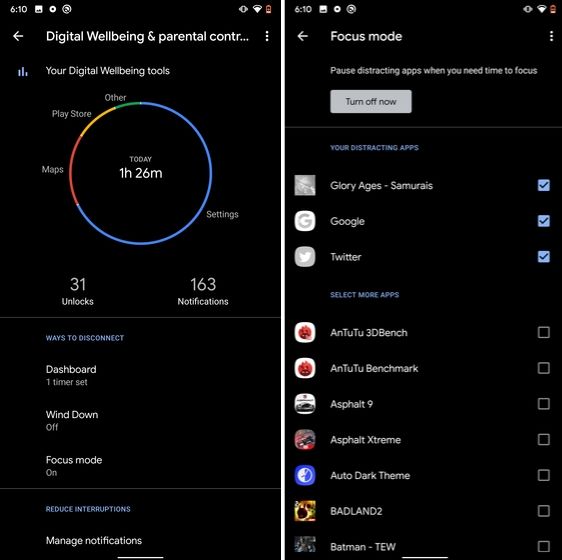
    4. Focus Mode hidden android features

    5. Share WiFi with QR Code

    I know the feeling when someone asks you to share your WiFi's password and you can't seem to remember it. If you use a strong password with multiple hashes and characters then it becomes even more tedious to type it out. In such cases, a QR code can help you seamlessly connect to WiFi networks. Thankfully, Android 10 has this not-so-hidden feature under the WiFi Settings page. Open it and you will find the QR code scanner besides the "Add Network" section. Now, scan the QR code and you will be connected in no time.
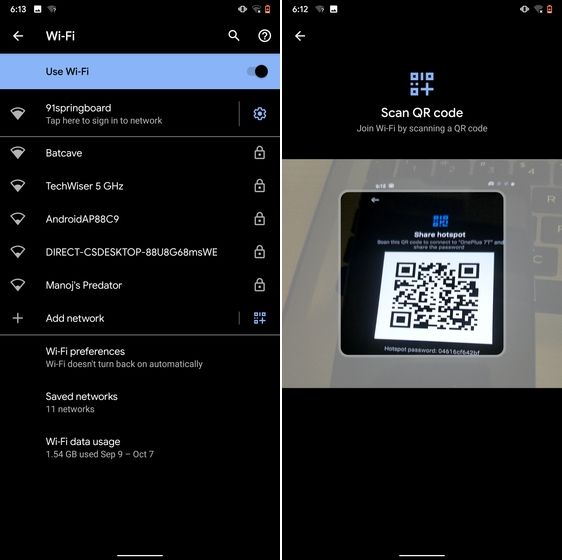
    5. Share WiFi with QR Code

    6. Randomize MAC Address

    MAC address is a unique identifier assigned to WiFi-enabled devices including smartphones. Most devices come with a static MAC which can be exploited and used for tracking user movement. So having a random MAC address reduces the chance of tracking and strengthens your privacy. If you are running Android 10 then you can randomize the MAC address from the WiFi Settings page. Tap on the WiFi that you are connected to and open "Privacy". Here, make sure "Use randomized MAC" is your default pick.
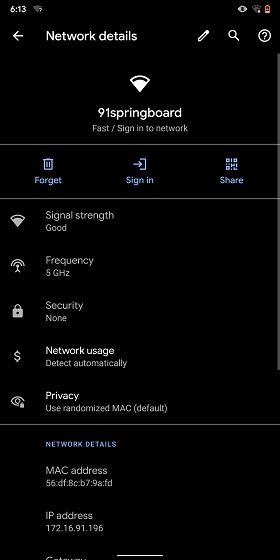
    6. Randomize MAC Address

    7. Force Apps to Resize in Split Mode

    Android has some unique features like Split Mode which make it quite distinct from iOS. It lets you run two apps at once so you can effortlessly multitask between them. However, not all apps support Split Mode and that's where this hidden Android feature comes into play. With this feature, you can force any app to resize in split mode, irrespective of the app compatibility. So to enable this feature, open Settings and search for "resizable". Open the first result and enable "Force activities to be resizable". Now, restart your device and you can enjoy any app in the Split mode.
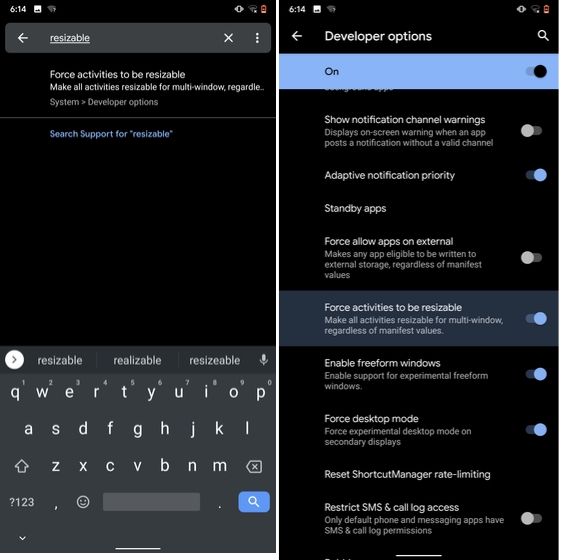
    7. Force Apps to Resize in Split Mode

    8. Default USB Configuration

    If you are someone who regularly connects Android devices to PC then this sneaky feature is going to help you a lot. Android 10 now allows you to choose your default USB configuration. If you transfer files regularly then simply choose the desired settings and you are good to go. To configure USB, open Settings and search for "Default USB" and tap on the first result. Here, choose "File transfer" or any other settings based on your preference.
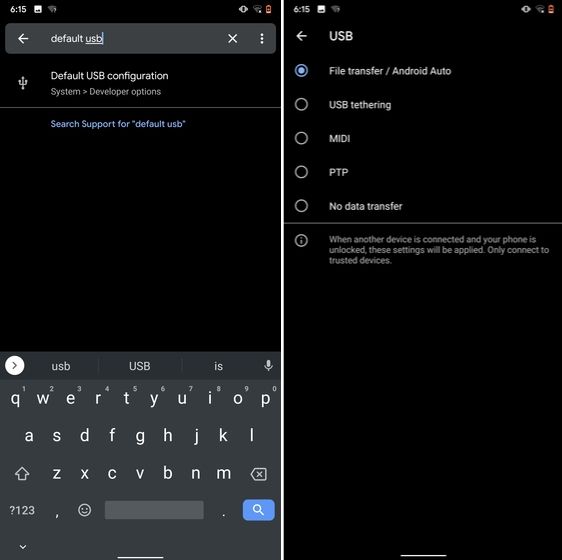
    8. Default USB Configuration (2) hidden android features

    9. Private DNS

    While Private DNS was launched with Android Pie, it still remains one of the least talked features of Android. It allows you to encrypt your DNS query so no one can read it, not even your internet service provider. You can find the Private DNS feature in the "Network and Internet" settings page. Here, open "Private DNS" and choose Automatic for Google's DNS or you can also select some other DNS providers as well. I would recommend you to go with Cloudflare's DNS.
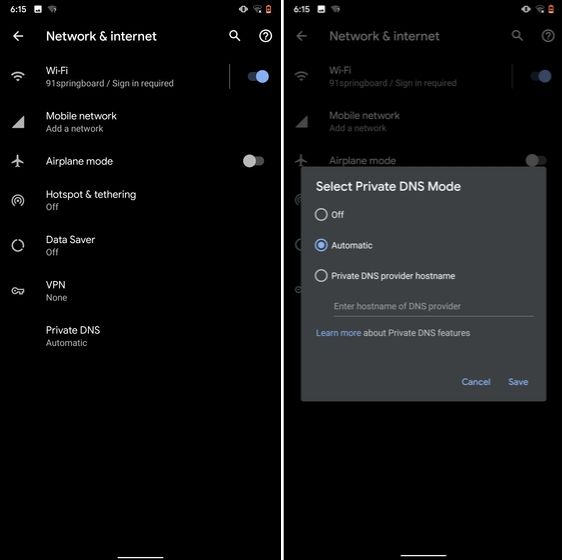
    9. Private DNS

    10. Device Theming

    Device theming has finally arrived on Android, but it's still hidden under the developer options. You can change the accent color, font and icon shape from a handful of options. To find the desired settings page, open Settings and search for "theming". Tap on the top result and customize your Android device as you prefer.
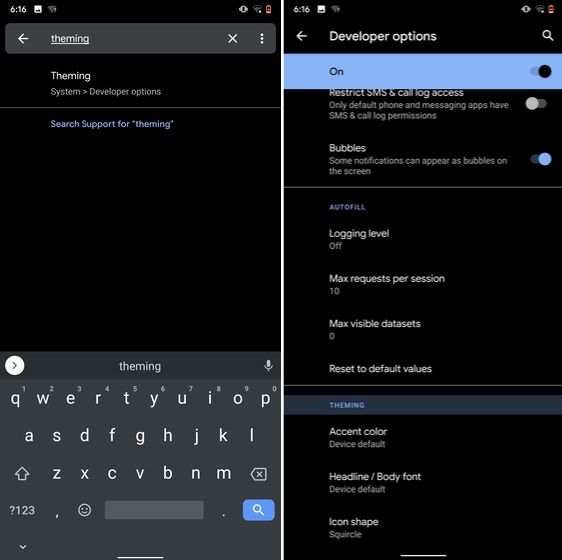
    10. Device Theming

    11. Show Taps While Screen Recording

    With the release of Android Oreo, Google removed the ability to show taps while screen recording for security reasons. However, the settings to configure taps is still available and hidden under the developer options. Just open the Settings page and search for "taps". Open the first result and enable the toggle. Now, you can record your screen with taps and that's really convenient.
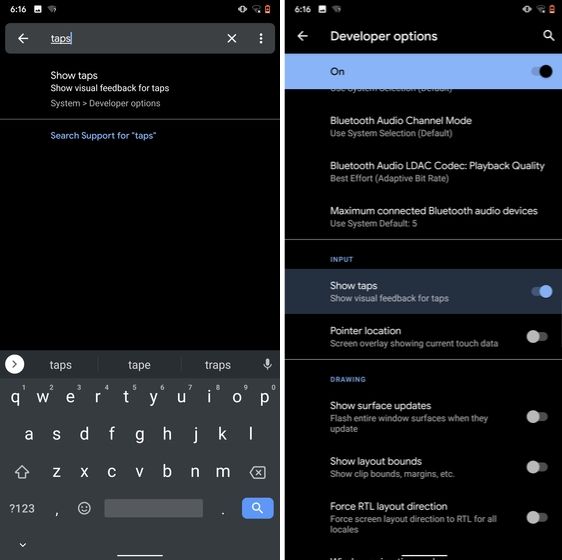
    11. Show Taps While Screen Recording hidden android features

    12. Capitalize Words Quickly

    If you want to capitalize words quickly then Gboard has this nifty feature which is super helpful and I simply love it. Just select the words and tap the "Shift" button twice to capitalize a chunk of words at once. You can also make it lowercase by similarly double tapping the shift button. And if you just want to keep the initials capital then tap the shift button once. That's pretty great, right? So go ahead and type hassle-free with Gboard.
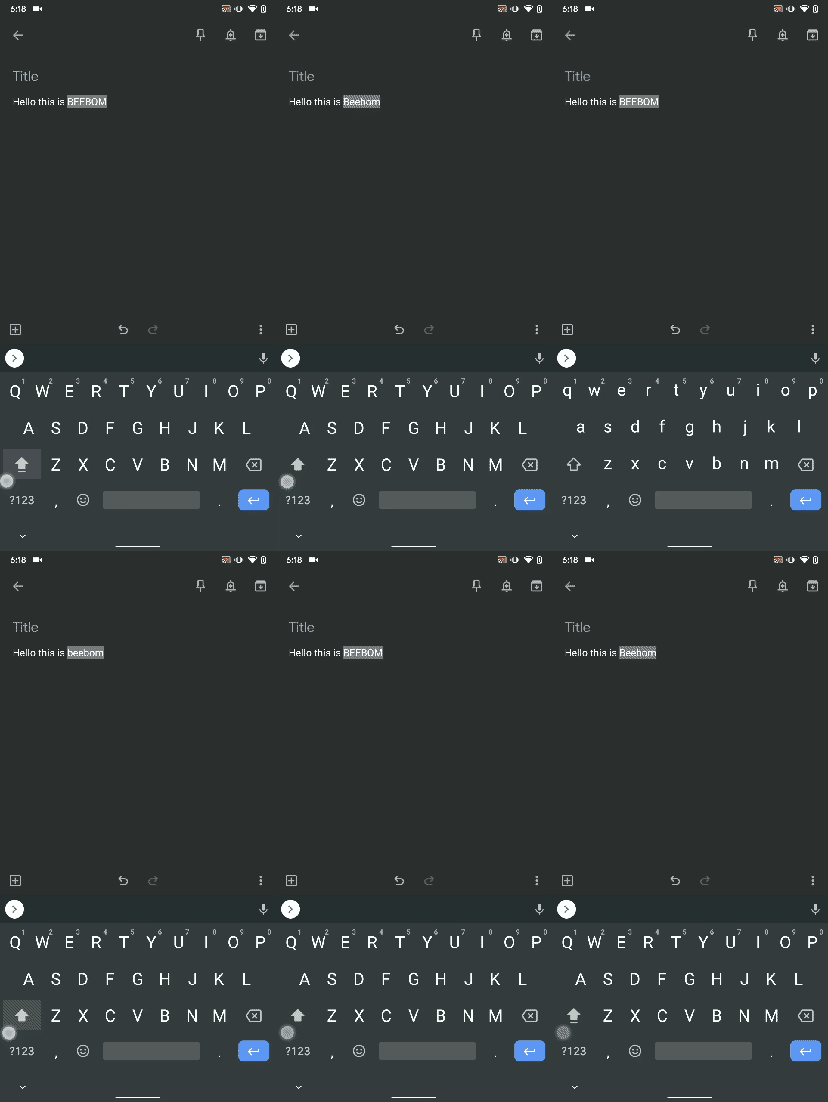
    Capitalize Words Quickly

    13. Uninstall Multiple Apps

    One of the best hidden Android features is that you can uninstall multiple apps at once. It works on older versions of Android as well so that is great. All you have to do is open the Google Play Store and tap on the hamburger menu and select "My apps and games". Here, switch to the "Installed" section and then tap on "Storage". After that, simply select apps that you want to uninstall and hit that "Free Up" button. Voila, multiple apps just got uninstalled in just one tap.
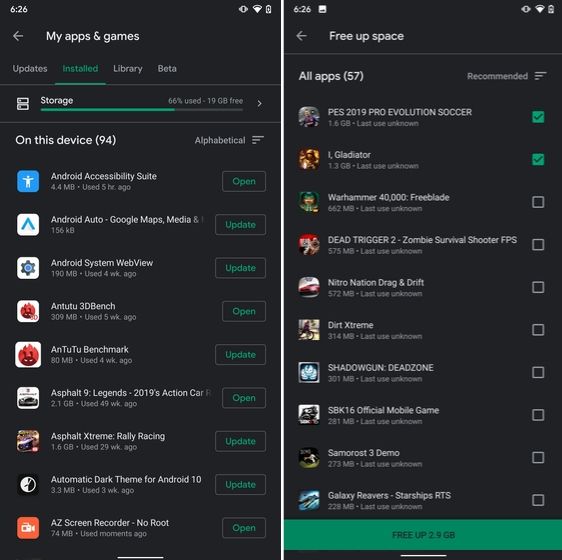
    13. Uninstall Multiple Apps

    14. Clear Site Storage Using Chrome

    Chrome is notorious for accumulating a large amount of data in background which makes the performance worse and also takes up crucial storage space. If you want to check what websites are eating up your memory space then a hidden Chrome setting can help you with that. Open Chrome on your Android device and head over to its Settings page. Now, navigate to Site Settings and open Storage. Here, you will find all the websites with their storage space. Open any website and tap on the "Delete" icon to finally free up your internal storage from unnecessary cached data.
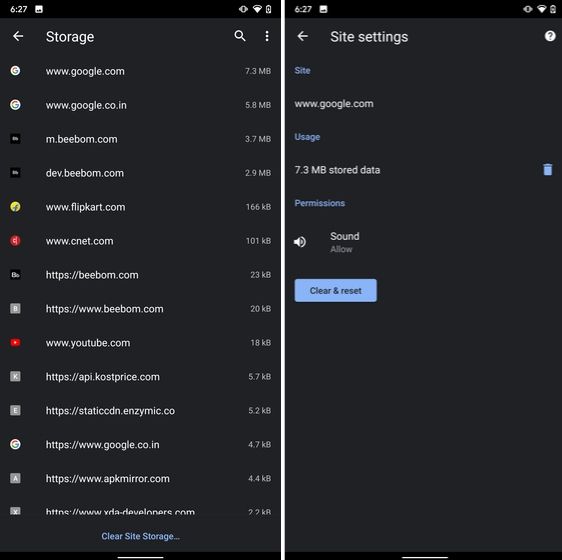
    14. Clear Site Storage Using Chrome

    15. Street View Layer in Google Maps

    Street View is an immersive way to explore places and find new landmarks, hotels, restaurants from anywhere around the world. Now, the Street View Layer has been added to Google Maps and it works pretty well. To check if Street View is available in your region, open Google Maps and tap on the "layer" icon on the top-right corner. Now, tap on "Street View" icon and then zoom out to find blue lines on the map. Finally, tap on the blue lines and Street View will show up for that place. That's cool, right? So go ahead and check out Street View to find some hidden gems around the world.
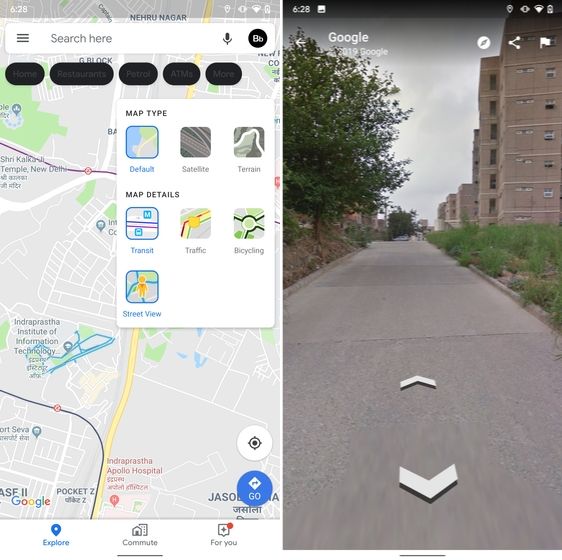
    15. Street View Layer in Google Maps hidden android features

    Note: The blue lines show up wherever street view is available.

    @EVERYTHING NT

    Related articles